
Back to School !
It’s the same every July: ‘Back to School!’ proclaim the shops, the minute schools break
up for the Summer, much to the dismay of children – and their teachers – alike.
Now that the children are back in school, a semblance of normality has returned. Imagine,
however, that in just a few weeks’ time schools were to be closed again for a number of
weeks to allow children to help with the harvest?
In the past, village children had a close connection to farming life, even if their parents didn’t work the land. It was common for young people to help out on farms – sometimes voluntarily, sometimes for pocket money. Perhaps it was because of this term-time work that school attendance in Newbold Verdon was seen as a concern, as recorded by Mr Cadle in the primary school Head Teacher’s log book for 1937:
‘The attitude of many parents to school attendance in this village leaves much to be desired…
‘26 children absent this morning. I am convinced that many of them could be at school
and have telephoned the Office for assistance in this matter. The attitude of some
parents is inexplicable.’
and this was before the days of cheap flights during term time !
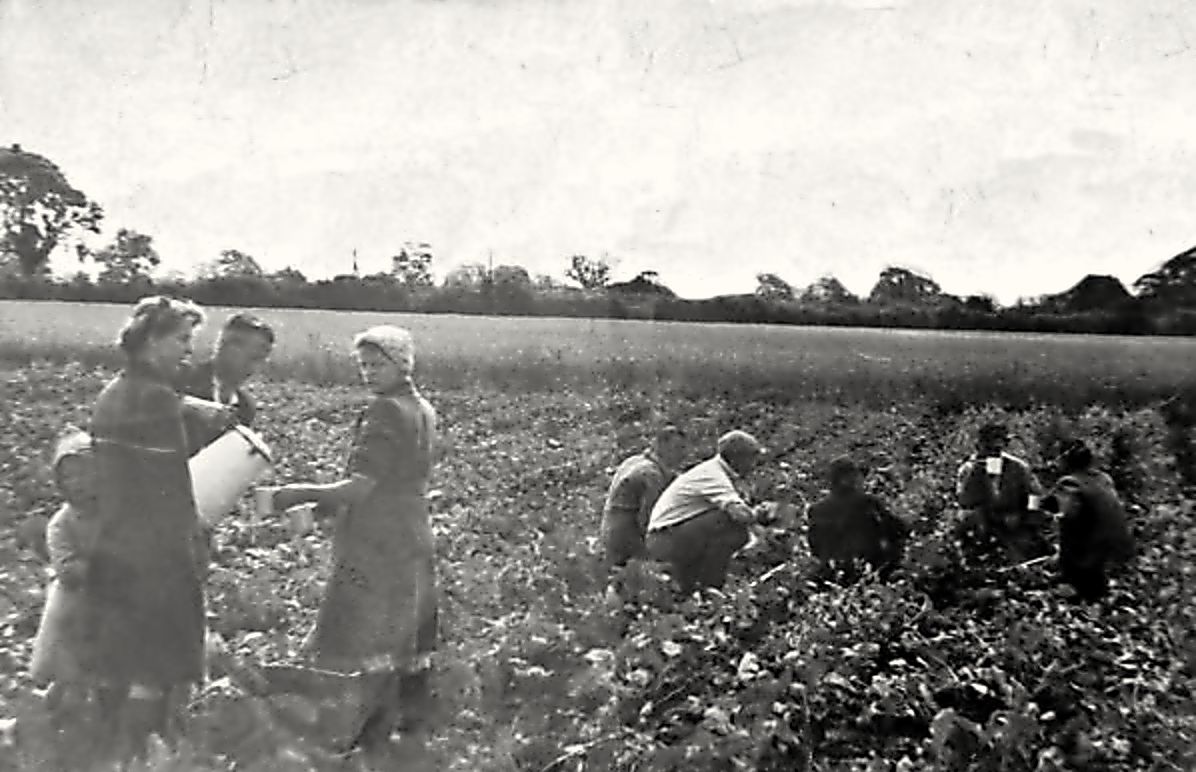
During World War II, with food production vital to the war effort, children were regularly released from school to support local farmers. Mr Cadle’s log book states:
‘26th September 1941 – ‘‘School closed tonight for fortnight potato harvest.’
Teachers supervised work parties, and pupils earned small wages for their contribution. In 1942, Leicestershire even adjusted school calendars: Autumn terms were shifted, Whitsun holidays moved to
match haymaking, and up to twenty half-day closures were introduced during peak potato-lifting weeks.
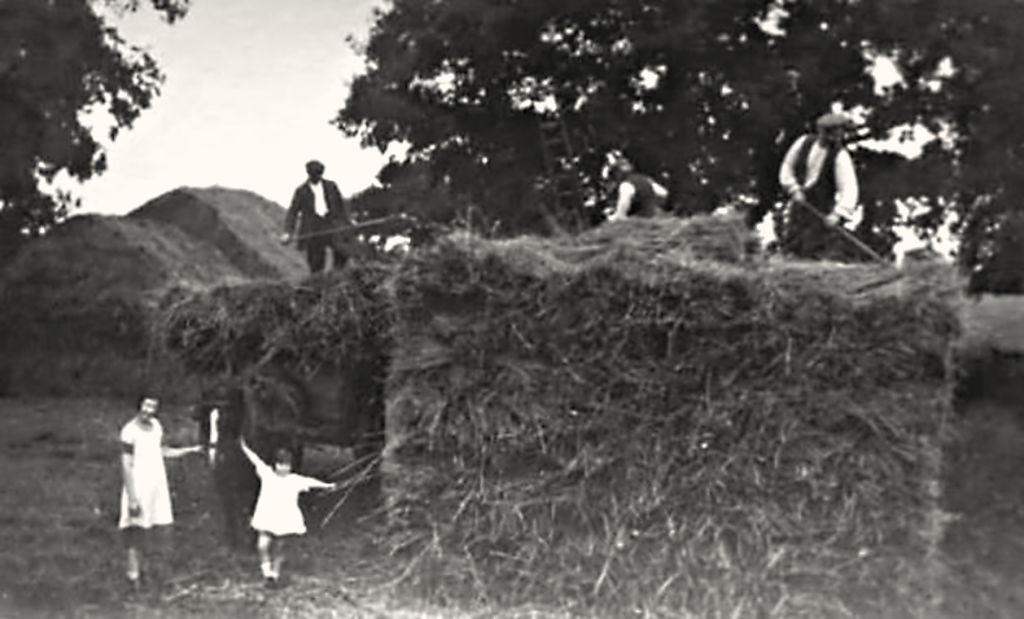
collect the hay at Halifax Farm, Newbold Heath
In Newbold Verdon, potato picking and wheat-gathering were two of the activities children were needed for. Entries in the primary school Head Teacher’s log book from Autumn 1941 demonstrate this, as Mr
Cadle reported that children ‘went gleaning in Mr Milner’s field’ (gleaning being the collecting-in of the heads of wheat that had not been gathered by the farmer and his workers when harvesting). Six tea-chests of wheat was said to have been gathered on one day in September of that year.
These glimpses into school life remind us how closely village routines once followed the rhythms of the land. There are plenty of documents relating to schooling and farming in the village in the Archive: why not do a search of the Catalogue and find out more?
The main article photograph shows the Tovey family harvesting potatoes off Bosworth Lane
